
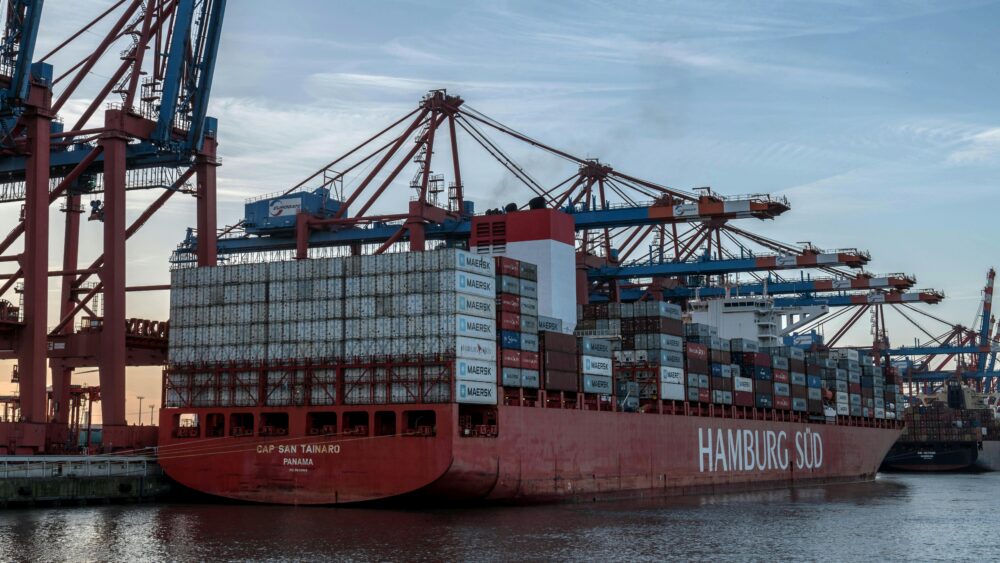
The roots of today’s global supply chains lie in the manufacturing boom of the early 20th century—but their explosive growth was driven not just by factories, but by global trade.
As industrial production accelerated in the early 1900s, manufacturing economies learned how to produce goods at scale and move them efficiently to market. Railroads, shipping lanes, and standardized production all reduced costs and increased output. Efficiency became the dominant goal. Labor conditions, while often poor, remained largely a domestic issue, governed—eventually—by national laws, unions, and public oversight.
But once production crossed borders, that oversight fractured.
Manufacturing + Trade: A Powerful and Destabilizing Combination
By the mid‑20th century, improvements in transportation and trade policy transformed manufacturing. Lower tariffs, trade agreements, and the later rise of multilateral institutions allowed goods to move across borders faster and at lower cost than ever before. Manufacturing no longer needed to stay close to consumers—it could shift to wherever trade advantages were strongest.
As labor standards tightened in the U.S. and Europe, companies increasingly relied on international trade to stay competitive. Production shifted to countries with lower labor costs and growing export capacity. Factories multiplied in Asia, Latin America, and parts of Africa, driven by export‑oriented growth strategies.
Trade unlocked opportunity—but it also created distance.
Brands became global traders rather than manufacturers. Supply chains extended across borders, customs regimes, currencies, and legal systems. Responsibility became fragmented, and at each step of the trading chain, accountability weakened.
An Unchecked Supply Chain Built for Speed and Cost
By the 1980s and early 1990s, global trade volumes were soaring. Apparel and consumer goods flowed across borders in massive quantities. Quotas, tariffs, and sourcing strategies became tools for commercial optimization.
But labor protection was not embedded into global trade systems. Governments competing for export orders were reluctant to strictly enforce labor laws. Buyers pressured suppliers on price and speed. Subcontracting expanded quietly. The supply chain became optimized for trade efficiency, not worker protection.
The result was a system where:
- Long hours were normalized
- Wages lagged behind production demands
- Oversight ended at the factory gate—or earlier
- Transparency was neither required nor rewarded
The 1990s Crisis: When Global Trade Met Public Scrutiny
This imbalance collided with public awareness in the 1990s.
Global trade had made supply chains invisible—until media, activists, and NGOs made them visible again. One of the most high‑profile examples was the Kathy Gifford apparel controversy, which revealed allegations of labor abuses in overseas factories producing for a U.S. brand.
The issue was not individual intent. It was structural. Trade had allowed brands to scale globally without scaling responsibility. Consumers began to realize that low prices were connected to distant labor practices—and that trade insulated companies from accountability.
That insulation collapsed.
Social Compliance: A Response to Trade Without Guardrails
The rise of social compliance was a direct response to globalization driven by trade.
Brands needed a way to govern labor practices across borders where legal systems, enforcement capacity, and cultural norms varied widely. Trade agreements addressed tariffs and quotas, but not working hours, wages, or safety.
In response, companies adopted codes of conduct, audits, and third‑party certification systems. These tools were designed to overlay labor expectations onto global trade networks that had none built in.
But early compliance models struggled. Static audits clashed with dynamic production cycles. Zero‑tolerance rules conflicted with economic realities. Too often, compliance rewarded appearance rather than truth.
Why WRAP Exists in a Trade‑Driven World
Worldwide Responsible Accredited Production (WRAP) emerged from this context—not as a rejection of global trade, but as a recognition of its consequences.
WRAP acknowledges that:
- Global trade is essential to modern manufacturing
- Supply chains are complex, cross‑border systems
- Sustainable labor standards require transparency, not denial
- Improvement must be continuous, not cosmetic
By emphasizing independent certification, realistic corrective action, and honest disclosure WRAP seeks to bring accountability into the global supply chain. In today’s trade‑driven economy, responsible production is not just an ideal—it is a necessity.


 English
  Español
  Deutsch
  বাংলা
বাংলা  Tiếng Việt
  简体中文
简体中文