

Customs Compliance: A Cornerstone of Global Trade
As the international supply chain adapts to an ever-changing geopolitical landscape, one priority remains constant: customs compliance. For importers and exporters, this is not just a box to check—it’s a critical safeguard against delays, fines, and even the seizure of goods. In a world where products often pass through multiple hands, cross oceans, and traverse […]
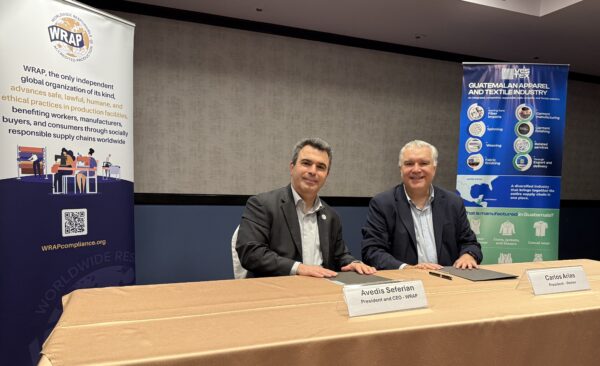
WRAP, VESTEX Partner to Advance Social Responsibility in Guatemala’s Apparel and Textile Industry
WRAP is excited to announce a new Memorandum of Understanding (MoU) with VESTEX, the leading trade association for Guatemala’s apparel and textile sector. The MoU was signed on November 20, 2025, in Guatemala City, with senior leaders for both organizations present. This strategic partnership underscores a shared commitment to competitiveness, sustainability, and social responsibility within […]
WRAP and ESCP Announce Strategic Partnership
WRAP is proud to announce our partnership with the Ethical Supply Chain Program (ESCP). The collaboration aims to enhance ethical practices in production facilities around the globe.Through this partnership we will work closely together to support suppliers in improving labor standards, ensuring a safe and fair working environment for all employees. WRAP’s expert team will […]

Textile Recycling and Responsible Business Conduct: The Role of Social Compliance
WRAP insights about the increase in textile recycling, extended producer responsibility laws, and application of social compliance programs to the textile recycling industry.
AAFA-WRAP social compliance guidance for non-CSR personnel
This joint publication by AAFA and Worldwide Responsible Accredited Production (WRAP) was developed with the premise that, with minimal training, sourcing/QA professionals can serve as invaluable CSR resources because they: Visit factories more frequently than social auditors (this gives them more opportunities to see the factory operating under different conditions); Are more directly engaged in […]

 English
 Español
 Deutsch
 বাংলা
 Tiếng Việt
 简体中文